The key solar power trends for 2027 show that solar will continue to play an important role in the energy transition, driven by rising electricity demand, advances in battery storage and growing concerns about energy security.
While previous years have focused on improving solar panel efficiency and increasing renewable generation, attention is shifting towards how businesses can use the electricity they generate more effectively.
This reflects a wider change in the energy industry. As businesses adopt electric vehicles (EVs), heat pumps and other electrical technologies, managing electricity consumption is becoming increasingly important.
DNV’s Energy Transition Outlook 2026 captures this shift. In its Foreword, the report states:
“Faster electrification of society is the single most powerful lever available to improve prosperity, strengthen energy security, and accelerate decarbonisation.”
DNV forecasts that electricity’s share of global final energy demand will rise from around 21% today to 33% by 2045.
With this in mind, what are the key solar power trends for 2027?
1. Commercial solar panels: UK rooftop growth continues
Commercial rooftop solar is expected to play an increasingly important role in the UK’s renewable energy expansion. Demand for commercial solar panels is likely to keep rising as a result.
The UK government’s Clean Power 2030 Action Plan sets an ambition to achieve 45 to 47GW of installed solar capacity by 2030, creating opportunities for businesses with suitable roof space.
Warehouses, manufacturing facilities, offices and sports venues can benefit from generating electricity on site, particularly where substantial daytime electricity demand exists.
Solar PV can help reduce reliance on grid electricity and provide businesses with greater control over energy costs.
2. Solar panel efficiency: TOPCon, back contact and perovskite tandem cells
Solar panel efficiency is expected to keep improving throughout 2027, enabling businesses to generate more electricity from available roof space.
Technologies attracting attention include:
- TOPCon panels: Already widely adopted, with ongoing improvements in efficiency and performance.
- Back contact solar cells: Designed to capture more sunlight by positioning electrical contacts behind the cell.
- Perovskite silicon tandem cells: An emerging technology offering the potential for higher conversion efficiencies, although long term reliability and commercial scale remain challenges.
- Bifacial panels: Capable of generating electricity from both sides in suitable installation conditions.
For commercial customers, system reliability, long term performance and return on investment will remain important when selecting solar technology.
3. Battery storage for commercial solar systems
Battery energy storage is set to become increasingly important as businesses look to make better use of solar electricity.
DNV reports that installed battery capacity has increased fourteenfold over the past five years, reflecting rapid technological progress.
By storing surplus electricity generated during daylight hours, businesses can use more of their own solar power when demand increases or generation falls.
Battery storage can also help manage peak electricity demand and reduce exposure to higher tariff periods.
In 2027, we expect greater interest in integrated solar and battery systems, particularly for commercial premises with fluctuating electricity requirements.
4. EV charging: using solar power for workplace and fleet charging
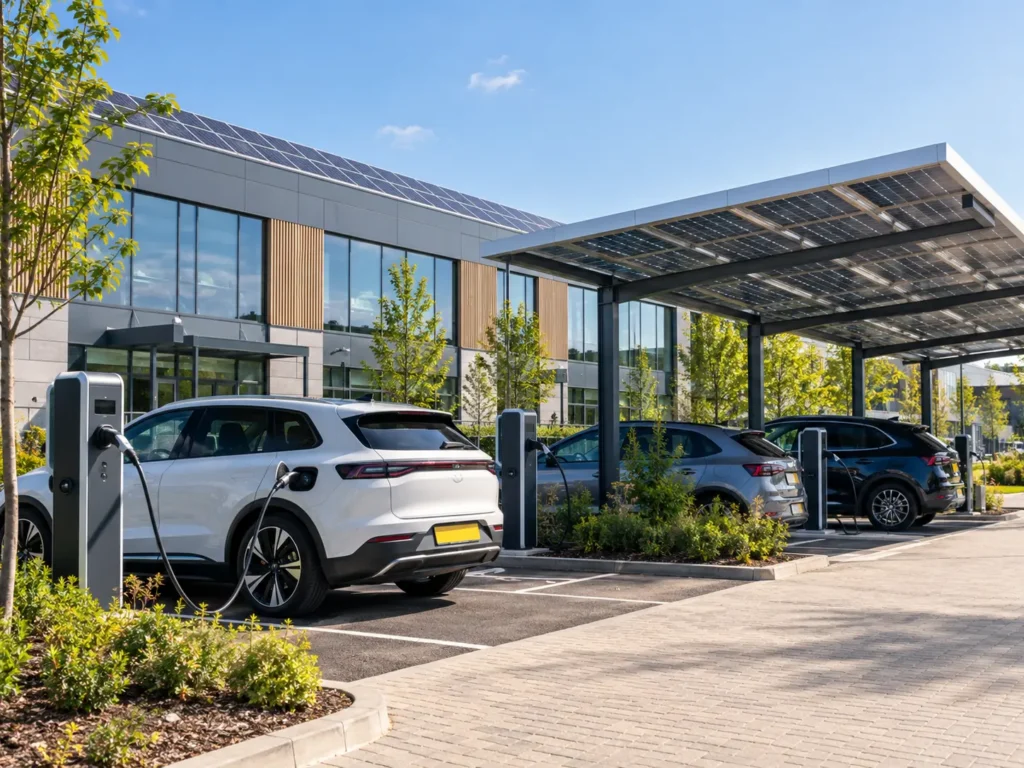
The electrification of transport is changing how businesses plan their electrical infrastructure.
As organisations introduce electric company cars, delivery vehicles and commercial fleets, workplace and depot EV charging requirements are increasing.
The UK’s public EV charging network continues to grow, with Department for Transport figures recording more than 121,000 public chargers in July 2026.
Combining solar PV with EV charging can help businesses use renewable electricity to charge vehicles while reducing reliance on grid imports.
Smart charging systems can manage when vehicles charge, taking account of available electrical capacity and wider building demand.
For warehouses, offices and logistics centres, considering solar generation, EV charging and future electrical requirements together will become increasingly valuable.
5. Smart energy monitoring improves solar performance
As electricity demand grows, understanding how energy is consumed will become as important as generating it.
Smart metering and monitoring systems enable businesses to track electricity consumption, identify inefficiencies and assess how effectively solar generation is being used.
Advances in data analytics and artificial intelligence could make these systems increasingly valuable.
For example, energy management software can use weather forecasts, electricity tariffs and consumption patterns to help determine when electricity should be stored or consumed.
This approach could benefit commercial buildings with changing demand throughout the day, including manufacturing sites and sports stadiums.
For businesses considering new solar installations, accurate energy measurement can also help determine the most appropriate system size.
6. Grid constraints encourage more flexible energy use
The rapid expansion of renewable energy and electrification is placing additional demands on electricity networks.
DNV identifies energy system integration as a major priority for the coming decade, with grid capacity and demand flexibility becoming increasingly important.
For UK businesses, limitations in existing electrical infrastructure can affect plans for installing EV chargers, heat pumps and other equipment.
Solar PV, battery storage and smart energy controls can help organisations manage electricity demand more effectively.
By shifting some activities to periods of higher solar generation or lower electricity demand, businesses may also reduce pressure on their existing electrical infrastructure.
7. Electrification changes commercial energy planning
One of the most important energy trends for 2027 will be the continued electrification of buildings, transport and industry.
As businesses move away from fossil fuel powered equipment, their overall electricity requirements may increase significantly.
This means solar PV can no longer be considered in isolation. Businesses planning future upgrades will benefit from understanding how solar generation, EV charging, battery storage and other electrical systems affect their total demand.
For those with existing solar installations, increasing electricity consumption may also signal that it is time to review or upgrade their solar PV system. Expanding generation capacity, introducing battery storage or upgrading inverters could help meet changing energy needs.
A coordinated approach to electrical infrastructure and energy management can help businesses prepare for future capacity requirements while improving energy efficiency.
FAQs on solar power trends for 2027
What is the biggest solar power trend for 2027?
Greater integration of solar power with battery storage, EV charging and smart energy management is expected to be one of the most significant trends.
Will solar panel efficiency improve in 2027?
Solar panel technology continues to improve, particularly through developments in TOPCon, back contact and tandem solar cells. Businesses should balance higher efficiency with reliability and long term performance.
Can solar panels help businesses reduce EV charging costs?
Yes. Solar generation can supply some of the electricity needed for EV charging, reducing grid purchases. Savings depend on vehicle charging patterns, solar generation and site electricity tariffs.
Why is battery storage important for commercial solar?
Battery storage allows businesses to use surplus solar electricity when generation is lower. It can also help manage peak electricity demand and energy costs.
How can businesses prepare for solar power developments in 2027?
Reviewing electricity consumption, existing electrical capacity and future requirements for EV charging, heating and other equipment can help businesses plan suitable solar and energy management systems.
Preparing for solar power in 2027
The solar power trends for 2027 reflect a growing need for businesses to manage renewable generation and electricity consumption together.
Powercor’s Vision Engineering solar project demonstrates how businesses can address electrical capacity constraints through smarter energy management. By installing a larger solar photovoltaic (PV) system, Powercor helped Vision Engineering generate more electricity on site, reduce reliance on the grid during peak operational periods and maximise energy cost savings.
Powercor supports commercial and industrial customers with solar PV, battery storage and electrical infrastructure solutions, helping organisations plan for increasing electricity demand and a more electrified future.
You can save money and become more energy efficient with the help of Powercor’s Solar Calculator for schools, offices, warehouses and other commercial buildings. Complete the form to receive your complimentary Solar Installation Plan.