Solar panels turn daylight into usable electricity, giving businesses the opportunity to generate power directly from their own buildings. For organisations with large roof areas and significant daytime electricity demand, that can make solar a particularly practical part of an energy strategy.
But how do solar panels work, what happens to the electricity once it has been generated, and what determines how much energy a commercial solar system can produce?
How do solar panels work?
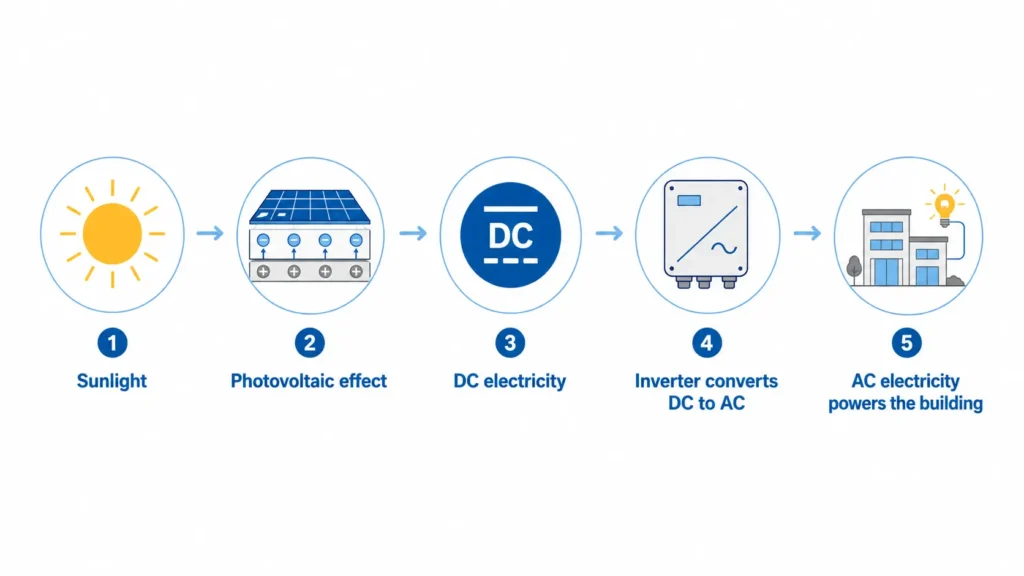
Most commercial solar installations use photovoltaic panels, commonly known as solar PV. Each panel contains photovoltaic cells made from semiconductor materials, usually silicon.
When daylight reaches these cells, energy from the light causes electrons within the material to move. This movement generates an electrical current through a process known as the photovoltaic effect.
The electricity produced by the panels is direct current, known as DC electricity. Buildings generally use alternating current, or AC electricity, so the generated power needs to be converted before it can supply lighting, machinery, computers, heating systems and other electrical equipment.
That job is handled by the solar inverter. The inverter converts DC electricity from the solar array into AC electricity that can be used within the building.
Do solar panels need sunshine?
No, solar panels need light rather than constant bright sunshine.
They will usually generate considerably more electricity on a clear summer day than during dull winter weather, but generation continues when conditions are cloudy. This makes solar PV a viable technology in the UK despite the changing weather.
The amount of electricity generated will vary throughout the day and across the year. Panel orientation, roof angle, shading, local conditions and the size of the installation all affect performance.
For commercial properties, the available roof area can be a major advantage. Warehouses, offices, schools, leisure facilities and other large buildings can offer substantial areas that may otherwise provide little practical value.
What happens to the electricity generated?
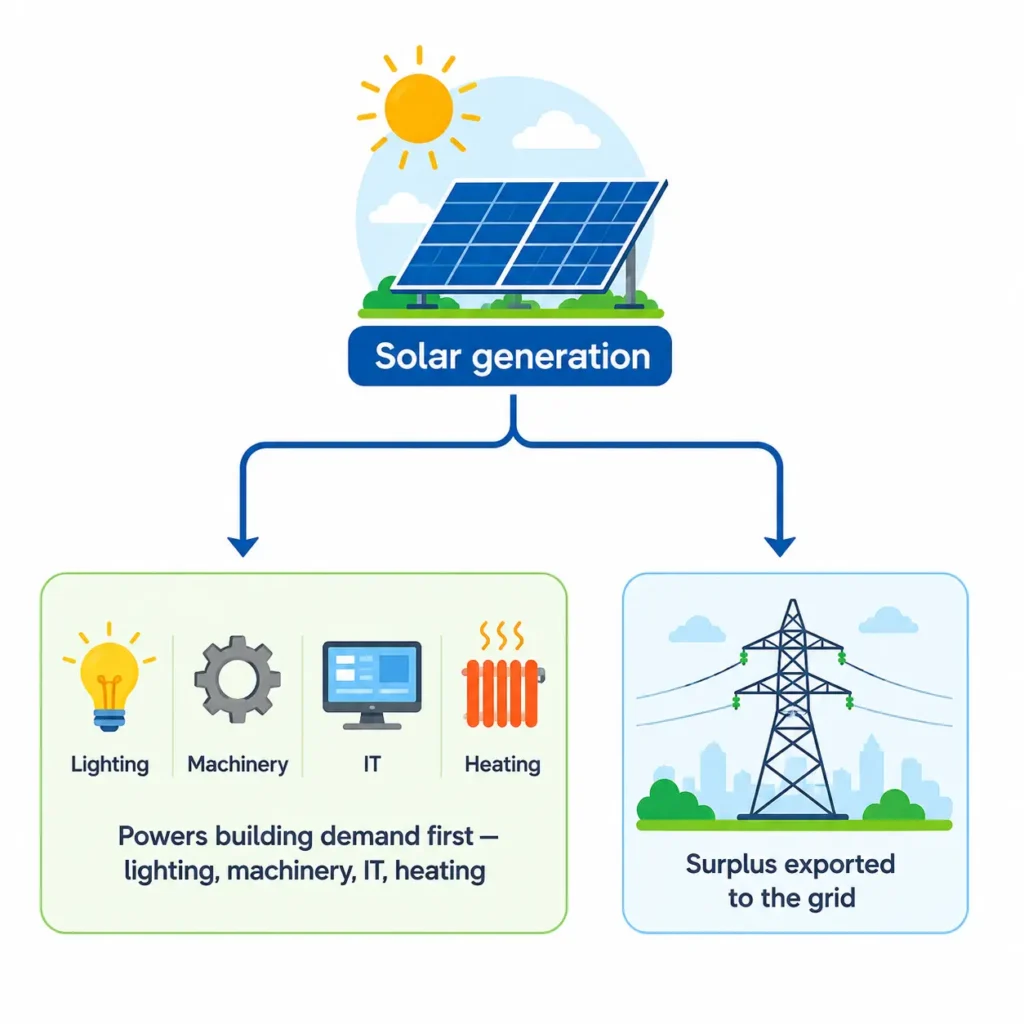
Once the inverter has converted the electricity into AC power, it can supply electrical demand within the building.
If the solar installation is producing electricity while the building is consuming it, that solar power can reduce the amount of electricity being drawn from the grid.
This is an important point for businesses considering solar. The value of a system is influenced by how its generation profile matches the building’s actual electricity demand.
A site using significant amounts of electricity during daylight hours may be able to consume a large proportion of the energy it generates. This can include warehouses with automated equipment, offices with cooling and IT loads, schools operating throughout the day or sports facilities with substantial electrical systems.
Surplus generation can also be exported to the electricity network where the relevant arrangements are in place.
How does battery storage fit into a solar system?
Battery storage can be added to a solar PV installation to store electricity that is not required immediately.
Instead of exporting surplus electricity as soon as it is generated, some of that energy can be stored and used later when demand increases or solar generation falls.
The suitability of battery storage depends heavily on how a site consumes electricity. Understanding the building’s demand profile is therefore an important part of designing the wider energy system.
For some organisations, solar may work effectively on its own. For others, combining generation, storage, monitoring and control can provide greater control over when locally generated electricity is used.
Why energy monitoring matters
Installing solar panels creates a new source of energy, but businesses still need visibility of what is happening across the site.
Good metering and monitoring can show how much electricity the solar installation is producing, how much the building is consuming and when electricity is still being imported from the grid.
This information helps facilities and energy teams understand whether the system is performing as expected. It can also reveal opportunities to change when equipment operates so that more demand occurs during periods of solar generation.
Over time, this data can give businesses a much clearer picture of how their building uses energy.
What affects the performance of commercial solar panels?
A successful commercial solar project starts with the building rather than the panels. Before considering system size or panel configuration, it is important to establish whether the premises are suitable for solar in the first place. Our guide, ‘How do I know if my business premises will be suitable for solar panels’, explains some of the key factors businesses should consider.
The roof needs to be assessed for available space, condition, orientation and potential shading. Engineers also need to consider the existing electrical infrastructure and the way electricity is consumed across the site. As the Royal Institution of Chartered Surveyors (RICS) highlights in its recent work on decarbonisation audits, understanding a commercial property’s energy use and overall performance is an important part of planning effective improvements.
System size should reflect the objectives of the organisation and the electrical characteristics of the property. Simply filling every available section of roof with panels does not automatically produce the right solution.
A well-designed system considers generation alongside real demand.
How can Powercor help?
Understanding how solar panels work is the first step. The bigger question for a business is how solar should fit into its existing electrical infrastructure and wider plans for energy use.
Powercor works across solar, battery storage, electrical infrastructure and energy efficiency, giving businesses the opportunity to look at the complete electrical picture rather than treating solar as a standalone technology.
With the right design and accurate information about how a building consumes electricity, solar can turn unused roof space into a productive energy asset and give organisations greater visibility and control over their electricity use.
Use Powercor’s Solar Calculator to see how much your organisation could make in electricity savings with solar panels.